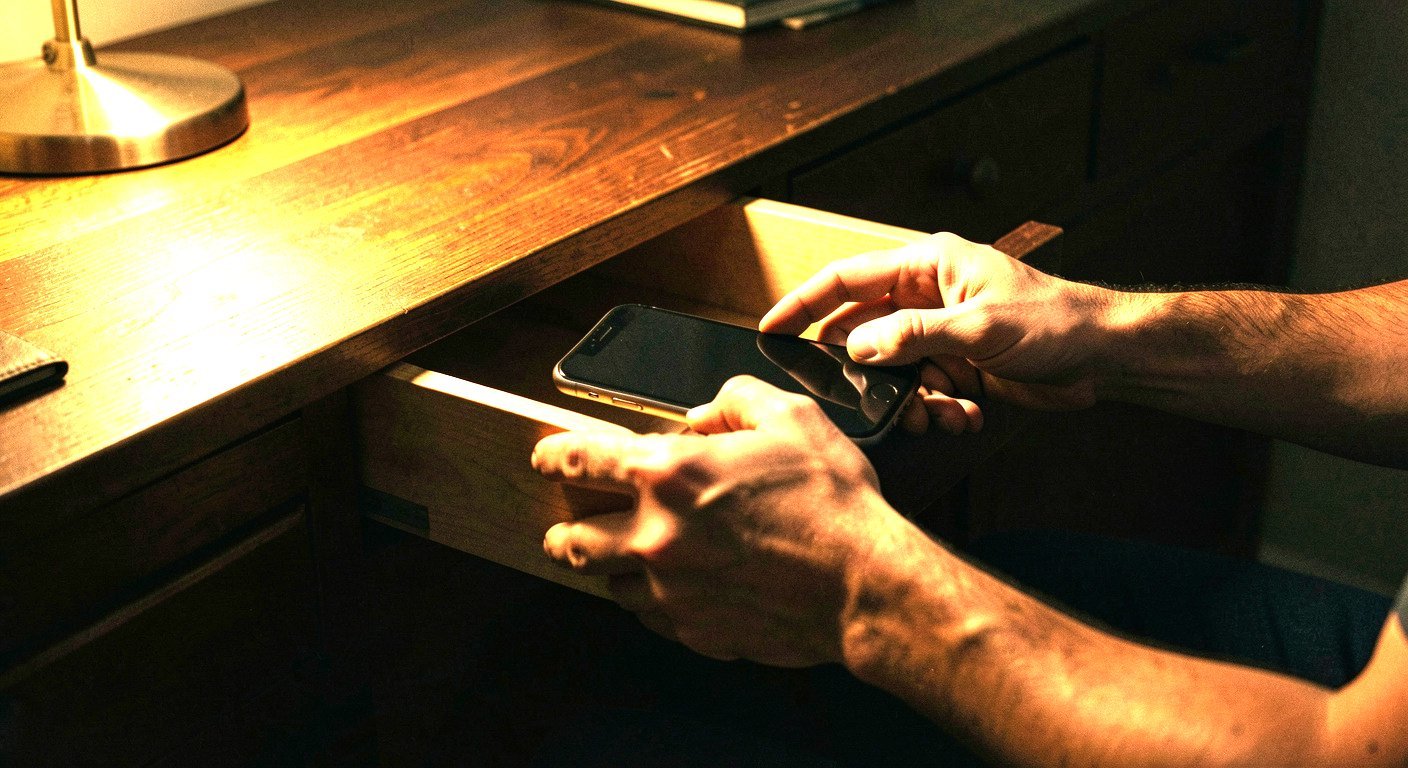
Reduce compulsive checking without pretending dopamine can be “detoxed” or that every useful phone feature must disappear.
How to break phone addiction for men: measure the apps and situations that pull you in, remove their easiest cues, create phone-free places and times, replace automatic checking with a specific alternative, and review the data weekly. The goal is not zero screen time. It is to make your phone serve deliberate purposes instead of repeatedly interrupting sleep, work, training, and relationships.
\n\n\n“Phone addiction” is a common phrase, but it is not a standalone diagnosis in the same way as a substance-use disorder. Researchers often use terms such as problematic smartphone use. A high screen-time number alone does not prove a disorder: navigation, work calls, reading, and video calls are different from an hour of scrolling you did not intend to do. What matters is impaired control, repeated use despite harm, and interference with daily life.
\nStart With the Pattern, Not a Dopamine Myth
\n\n\n\nYour phone can trigger a learned habit loop: a cue such as boredom, stress, a notification, or a difficult task leads to checking; checking sometimes delivers novelty, relief, or social feedback; that unpredictable reward makes the behavior easy to repeat. Dopamine is involved in learning and motivation, but a seven-day “detox” does not remove dopamine or reset the brain like a machine.
\n\nThat distinction matters. If you believe your brain is broken, you may attempt an extreme purge and then call yourself weak when normal use returns. A better approach is behavioral: change cues, add friction, protect high-value activities, practice tolerating urges, and build a phone setup you can maintain.
\n\n\n\nExperimental evidence is encouraging but not magical. In a 2025 randomized trial of 111 healthy students, limiting smartphone screen time to two hours a day for three weeks produced small-to-medium improvements in well-being, stress, sleep quality, and depressive symptoms. Screen time rose again after the intervention, which is a useful warning: a temporary restriction can help, but maintenance needs a lasting system.
\n\n\n\nIs Your Phone Use Actually a Problem?
\n\n\n\nBefore changing anything, look for functional costs. Over the past two weeks, has phone use repeatedly caused you to:
\n\n\n\n- delay sleep or reach for the phone during the night;
- interrupt focused work, studying, training, or conversations;
- open an app automatically and stay longer than intended;
- ignore responsibilities or people in front of you;
- feel unable to stop even after setting a clear limit;
- use scrolling to avoid anxiety, loneliness, anger, or a difficult task;
- take risks, such as checking while driving.
If several are common, the issue is worth addressing even if your total screen time looks “normal.” If the phone is mainly a tool for work or connection and is not displacing important activities, chasing an arbitrary low number may not improve your life.
\n\n\n
How to Break Phone Addiction for Men: The 7-Day Reset
\n\n\n\nThis reset is an assessment and environment redesign—not a cure. Keep calls, maps, banking, authentication, health tools, and genuinely necessary work functions. Target the uses that are compulsive or costly.
\n\n\n\nDay 1: Measure Without Performing
\n\n\n\nOpen Screen Time on iPhone or Digital Wellbeing on Android. Record yesterday’s total, your five most-used apps, unlocks or pickups if available, and your busiest hours. Then write three moments when the phone displaced something you value. Do not announce a detox or judge the number. You are collecting a baseline.
\n\n\n\nDay 2: Remove the Strongest Cues
\n\n\n\nTurn off every non-human notification that is not time-sensitive. Remove badges from social, news, shopping, games, and entertainment. Keep calls and essential messages from real people. Unfollow or mute accounts that reliably lead to comparison or rage-scrolling. Move the worst two apps off the home screen—or uninstall them for the week.
\n\n\n\nFriction works. A preregistered randomized field experiment found that enabling grayscale produced an immediate reduction in objectively measured screen time, while self-chosen time limits produced a smaller, gradual reduction. The study did not find immediate improvements in well-being or academic performance, so treat grayscale as a behavior tool, not a wellness cure.
\n\n\n\nDay 3: Protect Sleep
\n\n\n\nChoose a charging location outside the bedroom or at least beyond arm’s reach. Set a nightly cutoff 30 to 60 minutes before bed and use a separate alarm clock if necessary. If your job requires availability, allow calls from selected contacts through Do Not Disturb while silencing everything else.
\n\n\n\nThe rule is physical: the phone does not enter the bed. Do not depend on making the right decision when tired. If sleep is already a weak point, connect this reset to the practical steps in how to fix your sleep schedule.
\n\n\n\nDay 4: Create Phone-Free Zones
\n\n\n\nChoose two places and two activities where the phone is absent. Good candidates are meals, the bathroom, the first 30 minutes after waking, workouts, meetings, and conversations. Put the device in a bag, drawer, or another room—not face down on the table. A visible phone can still act as a cue.
\n\n\n\nDay 5: Schedule Access
\n\n\n\nInstead of trying not to check all day, choose specific windows: for example, ten minutes after breakfast, lunch, and the end of work. Batch email and non-urgent messages. Use app timers for the two apps that consume the most unplanned time. Android’s official Digital Wellbeing guidance explains how to review app time, unlocks, notifications, and set daily timers.
\n\n\n\nDo not make a limit so strict that you override it immediately. Start below your baseline but above fantasy. If you currently scroll for 150 minutes, a 90-minute cap that you follow is more useful than a 15-minute cap you dismiss at breakfast.
\n\n\n\nDay 6: Replace the Function
\n\n\n\nA removed behavior leaves a gap. Match the alternative to the trigger:
\n\n\n\n- Boredom: take a five-minute walk, read two pages, or do one small household task.
- Task avoidance: write the next physical action and work for ten minutes.
- Stress: take six slow breaths, stretch, or write what you are avoiding.
- Loneliness: call or message one specific person, then put the phone away.
- Need for stimulation: train, cook, build, or practice a skill that requires active participation.
If the phone is filling every quiet moment, our broader dopamine detox guide for men explains how to reduce high-frequency stimulation without pseudoscientific “brain reset” claims.
\n\n\n\nDay 7: Review and Keep Three Rules
\n\n\n\nCompare the same metrics you recorded on day one. More important, ask whether sleep, focus, training, and conversations improved. Keep the three changes that produced the clearest benefit. A sustainable system might be: no phone in bed, social apps only after 6 p.m., and all non-human notifications off.
\n\n\n\nA randomized trial of a 20-day goal-directed smartphone intervention found that both the experimental program and an active digital-detox comparison reduced problematic use and smartphone time; neither approach was clearly superior. The authors highlighted self-efficacy and planning as useful mechanisms. That supports a practical conclusion: your long-term plan matters more than finding one perfect app. See the trial on PubMed.
\n\n\n\nWhat Usually Fails
\n\n\n\n- Relying on willpower while leaving every cue intact. Environment design reduces the number of decisions you must win.
- Deleting everything without a replacement. Boredom, loneliness, and avoidance return; give each trigger another response.
- Treating work use and compulsive use as identical. Protect essential functions and target the costly pattern.
- Using a blocker you can dismiss instantly. Add a PIN held by someone you trust if voluntary limits repeatedly fail.
- Turning one relapse into a verdict. Review the trigger, strengthen the rule, and resume at the next decision.
- Buying another productivity app. More software cannot always solve a cue created by software.

When Self-Help Is Not Enough
\n\n\n\nConsider professional support when phone or internet use causes serious impairment, you repeatedly cannot control it, it is tied to depression, anxiety, ADHD, gambling, pornography, gaming, or substance use, or you use it to cope with distress you cannot manage alone. A clinician can help assess what sits underneath the behavior rather than assuming the device is the only problem.
\n\n\n\nGaming deserves a specific note. The World Health Organization recognizes gaming disorder when impaired control, priority over other activities, and continued gaming despite harm cause significant functional impairment. Heavy gaming is not automatically a disorder, and diagnosis belongs with a qualified professional.
\n\n\n\nFrequently Asked Questions
\n\n\n\nHow long does it take to break phone addiction?
\n\n\n\nThere is no universal timeline. Seven days is enough to identify triggers and test a better setup, but maintaining the change usually requires ongoing rules. Trials lasting two to three weeks show that use can fall, while follow-up data also show that old patterns can return.
\n\n\n\nDoes a dopamine detox work for phone addiction?
\n\n\n\nReducing cues and compulsive stimulation can be useful, but it does not remove dopamine or reset your brain. The practical benefit comes from changing behavior and environment, not cleansing a neurotransmitter.
\n\n\n\nShould I delete social media?
\n\n\n\nDelete or restrict the apps that repeatedly defeat your intentions. If one is necessary for work, try desktop-only access, scheduled windows, or removing it from the home screen before deleting the account itself.
\n\n\n\nWhat is a healthy amount of screen time for adults?
\n\n\n\nNo single number fits every adult or every use. Judge screen time by purpose and displacement: is it replacing sleep, movement, focused work, relationships, or responsibilities? Set limits around the apps and hours causing the actual cost.
\n\n\n\nHow do I stop checking my phone while working?
\n\n\n\nPut it out of reach, silence nonessential notifications, define a 25-to-50-minute work block, and choose the next task before starting. Check messages during a scheduled break. For a broader focus system, use the self-discipline framework.
\n\n\n\n\n
The Standard to Keep
\n\n\n\nBreaking compulsive phone use is not a contest to prove you can live without technology. It is the quieter skill of deciding what deserves your attention—and arranging your environment so that decision survives boredom, fatigue, and stress.
\n\n\n\nMeasure the pattern. Remove the strongest cue. Protect sleep and focused work. Replace what the scroll was doing for you. Keep the rules that make your real life easier to enter.
\n\n\n\n\n\n\n