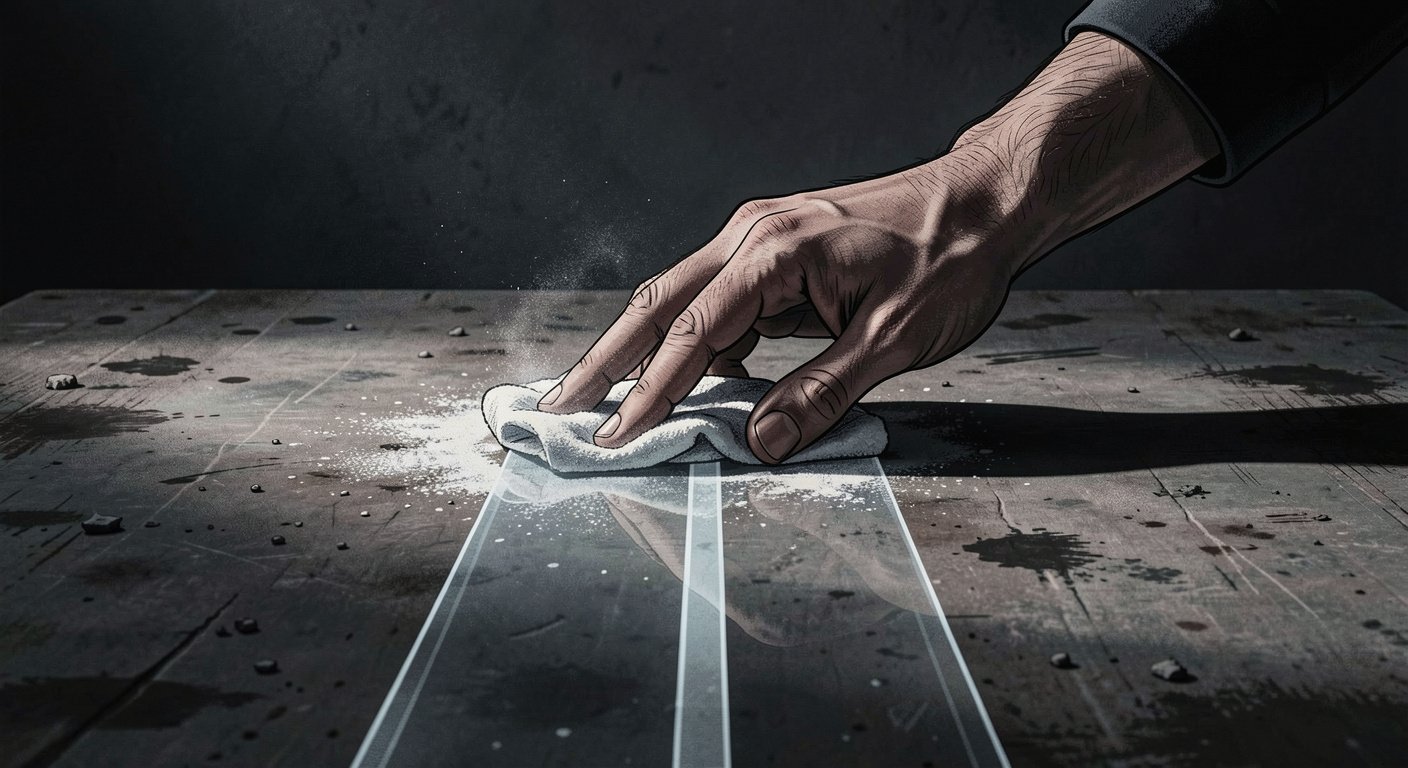
You don’t have a discipline problem. You have a friction problem. Every time you fail to follow through on a habit, there’s a hidden barrier that made the right choice harder than the wrong one. A friction audit finds those barriers and removes them. So you stop relying on willpower and start relying on an environment that works for you.
1. Why Willpower Is a Backup System
Willpower is not a strategy. It’s a reserve parachute. When everything else fails, willpower might save you, but you’re already in trouble if you need it.
FIELD NOTE
Here’s what nobody told you: willpower is a finite resource. Your brain burns real glucose making decisions and resisting temptation. Every choice you fight through depletes the tank. That’s why you can resist the donuts at 8 AM but demolish a pint of ice cream at 10 PM. It’s not that you’re weak at night. It’s that you spent all day fighting.
MISSION BRIEF
The men who look disciplined aren’t walking around with superhuman willpower. They’ve designed their lives so they rarely need it.
Think about the last time you skipped a workout. Was it really because you didn’t want to go? Or was it because your gym bag was buried in the closet, your headphones were dead, and the gym was a 20-minute drive? You didn’t fail a character test. You failed a friction test.
Willpower is your backup system. Your primary system should be an environment where the right choice is the easy choice. If you’re relying on willpower daily, you’re doing discipline wrong.
2. Identifying Your Friction Points
Most men have never actually looked at why they fail. They just feel bad about it and promise to try harder next time. That’s not a plan. That’s a hope, and hope is not a system.
A friction point is anything between you and the behavior you want that adds resistance. Tiny things. Things you wouldn’t notice unless you went looking for them. But they compound. Five seconds of friction repeated 300 times a year is 25 minutes of resistance. More importantly, it’s 300 moments where you might choose the easier path.
Here’s how to find yours. Pick one habit you keep failing at. Now walk through the entire chain of actions required to do it. From the moment you think about it to the moment you finish. Don’t judge. Just map it.
Say you want to read before bed instead of scrolling your phone. The actual chain might be: realize it’s bedtime, put down phone, go to bedroom, find book (where is it?), turn on lamp (bulb’s been dead for two weeks), get in bed, read three pages, get sleepy. That dead lightbulb is a friction point. The book that migrated to the living room is a friction point. Your phone charger being on the nightstand is a friction point.
None of these are character flaws. They’re design flaws. And design flaws are fixable.
Run this audit on any habit you keep failing at. You’ll find friction you’ve been tripping over for months without seeing it.
3. The 60-Second Rule
Here’s a rule that will change how you think about every habit: if starting a good habit takes more than 60 seconds from decision to action, you have too much friction.
That sounds extreme. It’s not. The moment between “I should do this” and actually doing it is where most habits die. Every second of delay is an opportunity for your brain to talk you out of it.
Want to meditate in the morning? If your meditation cushion is in a closet, your app is in a folder three screens deep, and you need to find headphones. You’ve already lost. By the time you’re set up, your brain has offered you five reasons to check email instead.
Now redesign it. Cushion stays on the floor where you’ll trip over it. App is on your home screen next to your alarm. Headphones live on the cushion. Decision to action: 10 seconds. No time for your brain to protest.
Apply this to everything. Workout clothes laid out the night before. Guitar on a stand, not in a case. Healthy snacks at eye level in the fridge. Water bottle on your desk, full.
The reverse also works. If a bad habit takes longer than 60 seconds to start, you’ve successfully added friction. Keep your gaming console unplugged and in a cabinet. Delete food delivery apps. Put the TV remote in a drawer with dead batteries.
You’re not fighting yourself anymore. You’re re-engineering the battlefield.
4. Digital Friction
Your phone is the most frictionless device ever created. That’s the problem.
In three seconds, you can go from bored to entertained, from anxious to distracted, from present to somewhere else entirely. Nothing in human history has ever required less effort to deliver more dopamine. Your discipline never stood a chance.
Most men try to fix this with willpower. “I’ll just use it less.” That’s like trying to eat one potato chip while sitting in a pile of them. You might succeed occasionally. You will fail eventually.
Digital friction means making your phone boring. Not unusable. Boring.
Delete social media apps. You can still check them on a browser if you need to, but the extra step of typing a URL and logging in is friction. That’s the point. Move any app you want to use less into a folder on the last page of your phone. Turn off all notifications except calls and messages from actual humans. Set your screen to grayscale. Nothing kills the appeal of Instagram faster than making it look like a newspaper.
Create phone graveyards. Places in your home where your phone is not allowed. The bedroom is the most important one. Buy an alarm clock. Charge your phone in the kitchen overnight. The first 30 minutes of your morning and the last 30 minutes of your night are now yours again.
Digital friction isn’t about hating technology. It’s about making your phone a tool you use instead of a tool that uses you. Right now, it’s probably the other way around.
5. Physical Environment Design
Your environment is either working for you or against you. There is no neutral.
Walk into your kitchen. What do you see? If the first thing at eye level is chips, cookies, or cereal, your kitchen is designed for easy snacking. Not because you’re a glutton. Because the food industry spent billions making sure their products are the most visible and accessible things in your house.
Now redesign it. Fruit bowl on the counter. Protein bars in a clear container at eye level in the pantry. Snacks you don’t want to eat go in opaque containers on the highest shelf, or better yet, don’t enter your house at all.
Your desk tells the same story. If your gaming PC and your work computer are the same machine, you’re fighting a losing battle every single day. Your brain doesn’t switch contexts just because you opened a different window. It still knows Steam is one click away.
Create zones. This space is for work. That space is for relaxation. When you sit in the work chair, your brain eventually learns: this is where focus happens. When you move to the couch, it learns: this is where we rest. No willpower required. Just consistent environmental signaling.
Your bedroom should be for sleep and sex. Nothing else. No TV. No laptop. No phone. If you do other things there, your brain stops associating bed with sleep, and you’ll wonder why you’re lying awake at 2 AM.
These changes sound small. They’re not. Your environment shapes your behavior more than your intentions ever will. A well-designed room does half your discipline work before you even wake up.
6. Social Friction
The people around you are part of your environment. And some of them are friction you can’t afford.
You know who they are. The friend who makes fun of you for eating clean. The coworker who insists happy hour is mandatory every Thursday. The family member who says “you’re no fun anymore” when you skip dessert. The group chat that’s nothing but complaining, gossip, and sending each other things designed to make you angry.
Every interaction with these people drains a little from the willpower tank. You spend energy defending your choices, managing their feelings, or pretending to be someone you’re not. That’s energy you don’t have for the things that matter.
Social friction isn’t always about toxic people. Sometimes it’s just about misalignment. Your buddy who games until 3 AM isn’t a bad guy. But if you’re trying to wake up at 5 AM to train, staying on voice chat with him until midnight is cost you can’t afford.
The fix isn’t dramatic. You don’t need to announce you’re cutting people off. You just need to reduce availability. Mute the group chat. Stop going to the Thursday happy hour you never enjoyed anyway. When someone pushes back on your choices, don’t explain. Just nod and keep doing what you’re doing. “Yeah, maybe I am boring now” is a complete sentence.
More importantly, add people who reduce friction. Find one friend who’s also trying to get in shape. One colleague who works hard and doesn’t complain. One person in your life who raises the standard just by being in the room. Iron sharpens iron. You know the saying. It’s true.
ACTION PLAN
7. The Weekly Friction Reset
Friction creeps back. You fix something, and three weeks later, the friction has returned in a slightly different form. The book migrates back to the living room. The notifications get turned back on. The phone finds its way to the nightstand.
This isn’t failure. It’s entropy. Systems degrade without maintenance. That’s true for cars, houses, and your discipline infrastructure.
Spend 15 minutes every Sunday running a friction reset. Not a full audit. Just a quick sweep.
Ask yourself three questions:
First: what did I struggle with this week? Not judgmentally. Clinically. If you missed three workouts, don’t spiral about being lazy. Just notice it and ask what got in the way.
Second: where did I add unnecessary friction? Did you mean to meal prep and run out of containers? Did you skip reading because the book was in the other room? Did you spend an hour on your phone because a new app notification pulled you in?
Third: what one thing can I fix in the next five minutes? Change one thing. Move your gym bag by the door. Refill your water bottle. Clear your desk. Delete the app that ate your afternoon. Five minutes, one fix.
That’s it. Don’t try to fix everything. Don’t turn this into another source of guilt. Just pick one point of friction and eliminate it. Over weeks, these small fixes compound into an environment that does your discipline work for you.
The Bottom Line
You’ve been fighting yourself for years. Trying to out-will your environment. Trying to be strong enough to overcome a world designed to make you weak. That’s not discipline. That’s self-punishment.
Real discipline isn’t about grinding through resistance. It’s about removing the resistance so thoroughly that the right choice becomes the obvious choice. The automatic choice. The choice that takes less effort than the alternatives.
Run the audit. Remove the friction. Stop fighting yourself and start designing a life where discipline happens naturally.
Because the goal isn’t to become a man with iron willpower. The goal is to become a man who doesn’t need it.
– [Building Discipline](/building-discipline/). Friction removal as the foundation of lasting self-control
– [Quitting Bad Habits](/quitting-bad-habits/). How to add friction to the behaviors you want to break
– [The 1% Rule](/the-1-percent-rule/). Why small environment tweaks compound into massive change