
Most men carry a backlog of almost-finished projects, barely-started goals, and ideas that died between enthusiasm and execution. Finishing what you start isn’t a talent. It’s a skill. Here’s what’s really happening when you quit at 85%, and how to become someone who closes loops instead of collecting them.
You have at least three half-finished things in your life right now. A fitness program you crushed for two weeks. A side project that’s 80% done and hasn’t been touched since March. A book with a bookmark permanently stuck at chapter four.
You’re not lazy. You started every single one with genuine energy and real intention.
The problem isn’t your work ethic. It’s that you never learned how to finish.
Starting feels electric. The new notebook, the gym membership, the first thousand words. It all comes with a dopamine hit. But finishing is boring, frustrating, and offers no applause until the very end. Most men, raised on a culture that celebrates the launch and ignores the grind, never develop the muscle for it.
Here’s the uncomfortable truth: the world doesn’t care about your great ideas. The man who finishes average work will always outpace the man with brilliant, unfinished plans.
The Graveyard of Good Ideas (We All Have One)
You know exactly where yours lives. The desktop folder called “Projects” with twelve subfolders untouched for months. The notes app full of business ideas you “didn’t have time” to launch. The garage reorganized halfway and abandoned when life got busy.
Here’s what nobody tells you: that graveyard isn’t neutral. Every unfinished project you walk past in your mind carries a small but persistent weight. It whispers that you don’t follow through. Over years, that whisper becomes a belief, and that belief becomes your identity.
The graveyard doesn’t just hold abandoned work. It holds pieces of your self-trust. Every time you add another body to the pile, you reinforce a story about yourself that gets harder to undo.
The men who consistently finish things aren’t more talented. They just stopped treating their ideas like disposable entertainment and started treating them like commitments.
Why Starting Feels Better Than Finishing: The Dopamine Trap
There’s a chemical reason you love beginnings.
When you start something new, your brain releases dopamine. The neurotransmitter tied to anticipation, novelty, and reward-seeking. Those first two weeks feel amazing because your brain is rewarding the novelty, not the work. You’re not excited about progress. You’re excited about the possibility of progress.
Then the dopamine fades. Around week three or the 85% mark, the novelty is gone. What’s left is repetitive, unglamorous effort. Your brain, operating without the chemical tailwind, starts hunting for the next shiny thing.
This is why you abandon the workout routine the moment it stops feeling exciting. Why your “almost done” projects sit untouched while you chase a new idea that feels just as promising.
The fix isn’t willpower. It’s recognizing the pattern and refusing to mistake “this feels boring” for “this isn’t working.” Boredom at the 85% mark isn’t a signal to quit. It’s a signal you’re exactly where finishers are made.
The 85% Rule: When the Last Mile Matters Most
Most people quit at roughly 85% completion. The heavy lifting is done. What’s left is detail work. Sanding, editing, follow-up, polish. That’s exactly where everyone bails.
The last 15% delivers none of the emotional rewards the first 85% did. Nobody sees your final edits. Nobody claps for the last coat of paint. The last mile is lonely, tedious, and feels disproportionate to the payoff.
But the last 15% is where value lives. A book that’s “basically written” is worth nothing. A business that’s “almost launched” generates zero revenue. A workout program you completed 85% of leaves you exactly where you started.
Finishing what you start means accepting that the boring, invisible final push is the only part that counts. Everything before it was preparation.
When you feel the urge to call something “good enough,” ask yourself: am I at 85%? If yes, you’ve found the exact moment where finishers separate from everyone else.
How Unfinished Projects Drain Your Mental Bandwidth
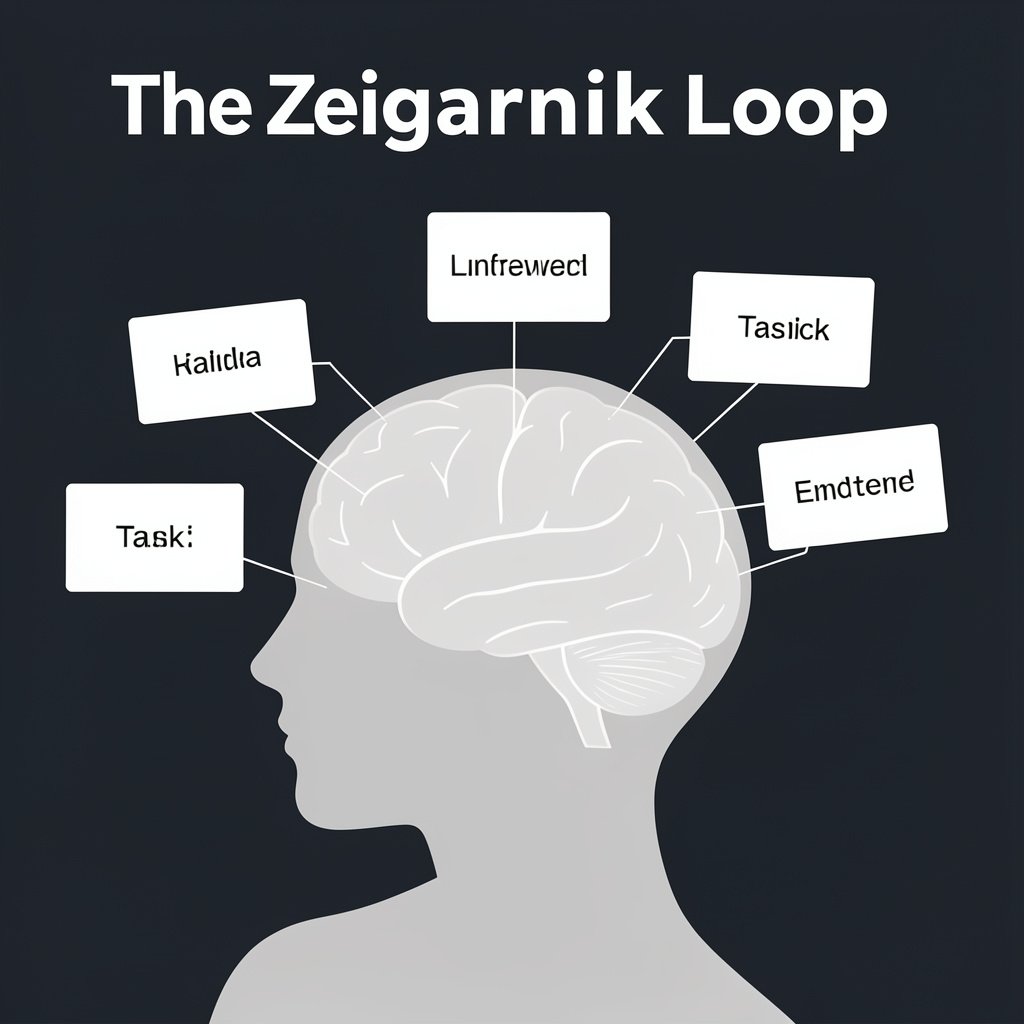
Psychologists call it the Zeigarnik Effect: your brain holds unfinished tasks in active memory, constantly pinging you about them. That half-read book on your nightstand? Your brain is tracking it. That email you drafted but never sent? It’s occupying mental RAM.
Open loops are cognitive debt. Every unfinished project consumes attention you could be spending on things that matter right now. You don’t feel the drain because it’s been there so long it feels normal. But it’s real, and it compounds.
When you start something new, your brain releases dopamine. The neurotransmitter tied to anticipation, novelty, and reward-seeking. Those first two weeks feel amazing because your brain is rewarding the novelty, not the work. You’re not excited about progress. You’re excited about the possibility of progress.
This is why men with dozens of half-finished projects feel constantly overwhelmed even when they’re not actively doing much. Their bandwidth is fragmented across a hundred open loops that were never closed.
The solution is simple, though not easy: close the loop or kill it. Either finish the thing, or consciously abandon it and remove it from your mental inventory. Both free up bandwidth. What destroys you is limbo. Leaving it hanging indefinitely, haunting you without serving you.
The Completion Ritual: Closing Loops Intentionally
Finishing isn’t just about the work. It’s about the psychological closure that tells your brain: this is done.
High-trust men develop a completion ritual. It doesn’t need to be elaborate. Archive the project folder. Write “DONE” and the date in a journal. Physically close the notebook and shelf it. The ritual matters because without it, your brain doesn’t register the finish line. It stays in problem-solving mode, churning on details that no longer need attention.
This is also how you build the identity of a finisher. Every time you consciously close a loop, you deposit evidence into your self-trust account. Over time, that evidence becomes a reputation you have with yourself: I finish what I start.
Pick one thing you’ve been dragging behind you. Finish it completely. Close the loop with intention. That single act, repeated, rewires your entire relationship with completion.

One Thing to Finish This Week (Pick It Now)
Don’t read this and nod and then close the tab. That’s what everyone does. That’s why everyone stays stuck.
Identify one specific, completable thing you’ve left unfinished. Not “get in shape.” Something with clear edges. The book chapter. The garage shelf. The email you owe. The registration form. The thing you’ve been “getting to” for weeks.
Now set a hard deadline inside seven days. Not “soon.” A specific day. Write it where you’ll see it.
Then remove every barrier between you and that finish line. If it takes thirty minutes of focused work, block thirty minutes on your calendar tomorrow morning. If you need a tool or piece of information, get it today.
This isn’t a productivity trick. It’s an integrity practice. When you tell yourself you’ll finish something and then you do, you’re proving your word means something. Even when the only person who heard it was you.
The Bottom Line
Nobody is coming to finish your work for you. No app, no system, no amount of planning will close your open loops. At some point, finishing what you start comes down to a moment of decision. The moment where the excitement is gone, the work is tedious, and you choose to keep going anyway.
That’s the moment that decides everything.
You already know which thing needs to be finished. You knew before you started reading. The only question is whether you’ll be the version of yourself who does it. Or the version who adds another body to the graveyard.
Pick it. Schedule it. Finish it. Then do it again.
FAQ
How do I know if an unfinished project is worth finishing, or if I should just let it go?
If this were already done, would it meaningfully improve your life right now? If yes, finish it. If no. If you’ve outgrown the goal or circumstances changed. Make a conscious decision to let it go. Write it down, close the file, release it. What you can’t do is leave it hanging. Decide. Either finish or abandon, but stop deferring.
I keep starting new projects before finishing old ones. How do I break this pattern?
This isn’t a discipline problem. It’s an emotional one. You’re chasing the dopamine of new beginnings to avoid the discomfort of the messy middle. The fix is a hard rule: no new projects until the current one is complete. It’ll feel restrictive. The itch to start something new is exactly the signal to ignore. Write down new ideas so you don’t lose them, but don’t act on them until your current commitment is closed. Over time, this rewires your brain to associate completion. Not novelty. With forward motion.
Comments are closed.